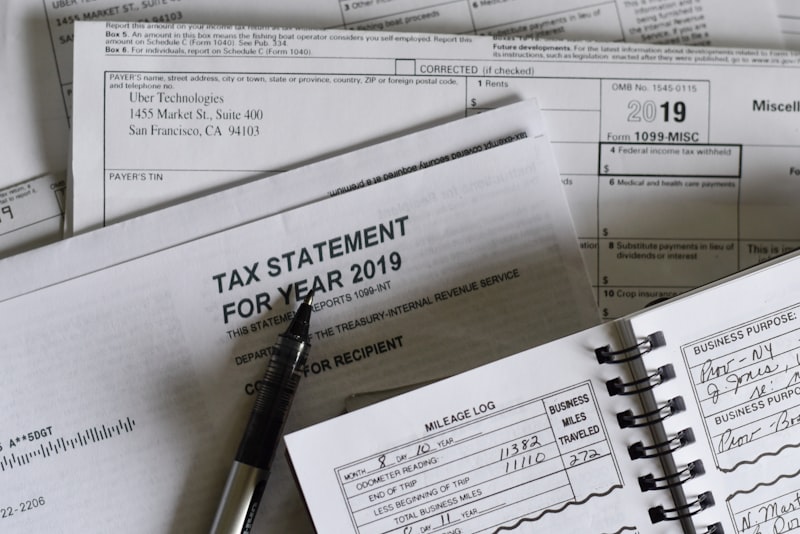
Understanding 1099s: Freelance and Investment Income Forms
A 1099 is an information return that reports income you earned outside of traditional employment. While a W-2 reports wages from an employer, 1099s report freelance income, investment income, and other types of payments.
Common Types of 1099 Forms
| Form | What It Reports | Who Receives It | | :--- | :--- | :--- | | 1099-NEC | Nonemployee compensation (freelance) | Freelancers, contractors, gig workers | | 1099-MISC | Miscellaneous income (rents, prizes, awards) | Landlords, prize winners | | 1099-INT | Interest income ($10+) | Anyone earning bank interest | | 1099-DIV | Dividend income ($10+) | Stock investors receiving dividends | | 1099-B | Brokerage transactions (sales) | Investors who sold securities | | 1099-K | Payment card/third-party network | Venmo, PayPal, Etsy sellers | | 1099-G | Government payments | Unemployment benefits, tax refunds | | 1099-R | Retirement plan distributions | IRA/401(k) withdrawals | | 1099-SA | HSA/MSA distributions | Health savings account withdrawals |
The 1099-NEC: Freelance Income
If you do freelance work, drive for a ride-share service, or sell services as an independent contractor, you will receive a 1099-NEC from each client who paid you the required threshold amount during the year. For the 2026 tax year, the reporting threshold for Form 1099-NEC is $2,000 [6], [10].
Key differences from W-2 income:
- No taxes withheld: You are responsible for calculating and paying your own taxes.
- Self-employment tax: You pay both the employer and employee portions of FICA taxes, totaling 15.3% [4]. You generally must pay self-employment tax if your net earnings from self-employment are $400 or more.
- Quarterly estimated taxes: You may need to pay taxes four times per year to avoid underpayment penalties.
The 1099-INT: Interest Income
If you earn $10 or more in interest from a savings account, CD, or money market fund, you will receive a 1099-INT. This is common if you use a high-yield savings account.
Even small amounts of interest are taxable. If you earned $25 in interest, you will receive a 1099-INT and must report it on your tax return.
The 1099-B: Investment Sales
When you sell stocks, bonds, or ETFs, your brokerage sends a 1099-B showing what you sold, the cost basis (what you paid), the proceeds (what you received), and your resulting gain or loss. This is how the IRS tracks capital gains.
The 1099-K: Payment Apps
If you receive payments through Venmo, PayPal, Stripe, or similar platforms, you may receive a 1099-K. Following the passage of the One Big Beautiful Bill Act, the reporting requirements for these platforms have been restored to a higher threshold [10].
| Tax Year | Reporting Threshold | | :--- | :--- | | 2026+ | $20,000+ and 200+ transactions [5], [9] |
Source: IRS, 2026.
Note: Personal payments (like splitting dinner with friends) are not taxable. 1099-Ks are intended for business transactions.
What to Do With Your 1099s
- Collect all forms by January 31: Employers and financial institutions are generally required to mail 1099s by this date.
- Verify the amounts: Check each form against your own financial records.
- Report all income: Even if you do not receive a 1099, you are legally required to report all income to the IRS.
- File your taxes: 1099 income is typically reported on Schedule C (business), Schedule B (interest/dividends), or Schedule D (capital gains).
If you are navigating these forms for the first time, use our Career Explorer to compare how different income streams might impact your overall tax situation.
Key Takeaway
1099 forms report income outside of traditional employment, and for 2026, the reporting threshold for freelance work (1099-NEC) has increased to $2,000 [6], [10]. Always keep your own records, as you are responsible for reporting all income to the IRS regardless of whether you receive a form.