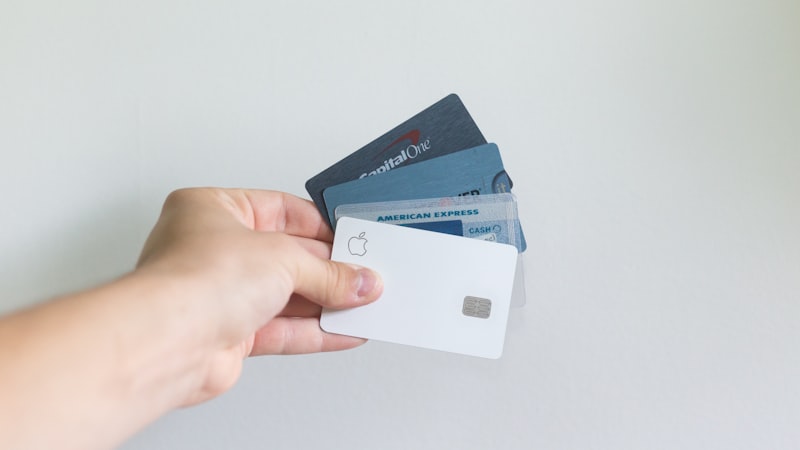
What Is a Secured Credit Card?
A secured credit card is backed by a refundable cash deposit [1], [7]. The deposit typically becomes your credit limit — for example, if you provide a $300 deposit, your credit limit is $300 [3], [6]. If you fail to pay your bill, the bank may keep the deposit to cover the outstanding balance [2].
From the user's perspective, it works exactly like a regular credit card: you make purchases, receive a monthly statement, and pay it off [2]. The difference is the deposit, which eliminates risk for the bank, making these cards accessible to individuals with no credit or those looking to rebuild a damaged credit history [3], [7].
Secured vs. Unsecured Cards
| Feature | Secured Card | Unsecured Card | | :--- | :--- | :--- | | Deposit required | Yes [1] | No [1] | | Credit limit | Equals your deposit [6] | Based on credit history [3] | | Credit check | Often lenient [6] | Stricter [3] | | Reports to bureaus | Yes [1] | Yes [1] | | Interest rate | Often higher [2] | Varies [10] | | Rewards | Rarely [6] | Often [1] | | Annual fee | Sometimes [6] | Sometimes [4] |
Source: Finance4Everyone compilation using CFPB and industry data, 2026.
How to Choose a Secured Card
1. Look for No Annual Fee
Some secured cards charge annual fees. Prioritize options with no annual fee to minimize your cost of credit building [6].
2. Check the Deposit Requirement
Most secured cards require a deposit to open the account [1], [7]. Ensure the deposit amount is affordable for your budget. Some issuers allow you to increase your credit limit later by adding to your deposit [3].
3. Confirm It Reports to All Three Bureaus
This is essential for credit building. Ensure the card issuer reports your payment activity to the three major credit bureaus: Equifax, Experian, and TransUnion [1], [2].
4. Check the Upgrade Path
The most effective secured cards allow you to "graduate" to an unsecured card after a period of consistent, on-time payments, at which point your security deposit is typically returned [7]. Look for issuers that provide a clear path to this transition.
How to Use a Secured Card Effectively
Rule 1: Small Purchases, Paid in Full
Use the card for one small purchase per month and pay the full balance before the due date. This builds a positive payment history without the risk of carrying high balances [1].
Rule 2: Keep Utilization Under 10%
Credit utilization—the percentage of your credit limit you are using—is a key factor in credit scoring. If your limit is $300, keeping your balance below $30 helps demonstrate responsible credit management.
Rule 3: Never Miss a Payment
A single late payment can negatively impact the credit score you are working to build [1]. Set up automatic payments for at least the minimum amount due to ensure you never miss a deadline [2].
Rule 4: Monitor Your Score
Check your credit score regularly. With consistent, on-time payments, you may see improvements in your credit profile over time [1], [6].
The Graduation Timeline
| Timeframe | What to Expect | | :--- | :--- | | Month 0 | Open secured card, provide deposit [7] | | Month 1-3 | First payments reported to bureaus [6] | | Month 3-6 | Score may begin to reflect on-time payments [6] | | Month 6-12 | Potential to pre-qualify for unsecured cards [7] | | Month 12+ | Request upgrade to unsecured, recover deposit [7] |
Source: Finance4Everyone calculation using industry standards, 2026.